






Can Roller Blinds Be Repa
This article answers the question many homeowners and installers ask — can roller blinds be repaired?
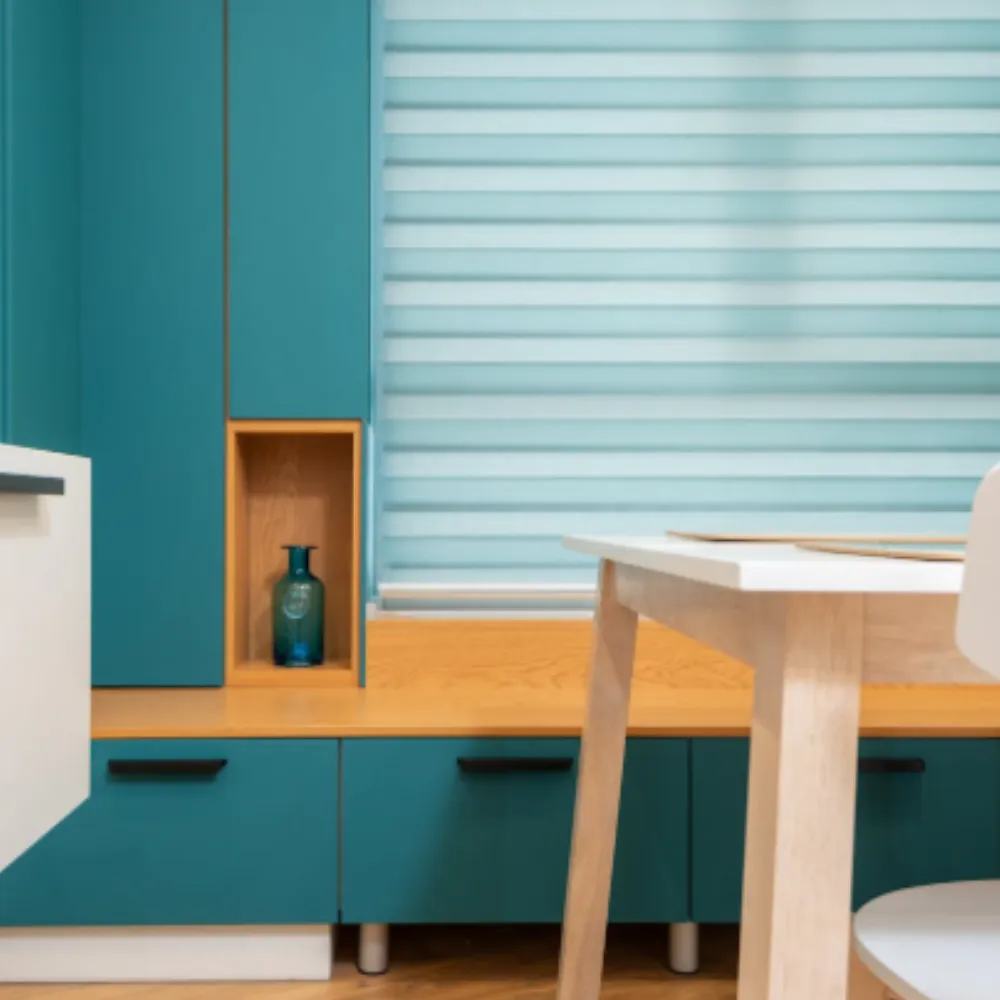
Can roller blinds be repaired
Blind Repair
This article answers the question many homeowners and installers ask — can
roller blinds be repaired? It also covers the most common issues, their causes,
and the steps needed to fix them.
Can Repair
The short answer is yes — most roller blind problems can be repaired without
replacing the entire blind.
Most issues are caused by a single failed component rather than a complete
system failure, which means replacing the correct roller blind parts is often
enough to restore full functionality.
This is good news for homeowners who want to avoid the cost of a full
replacement, and it is equally valuable for installers and distributors who
provide after-sales support.
Understanding the most common failure points and how to address them is a
practical skill that saves time and money throughout the supply chain.
The sections below cover the most frequent roller blind problems and provide
clear guidance on diagnosing and repairing each one.
Won't Roll
A roller blind that refuses to roll up is one of the most common complaints and
is usually caused by one of three issues.
These include a worn spring mechanism in a spring-operated blind, a jammed
clutch in a chain-operated blind, or fabric that has become misaligned on the
tube.
For spring roller blinds, the spring inside the tube can lose tension over
time, especially if the blind has been repeatedly pulled down too far or left
fully lowered for long periods.
In most cases, the spring mechanism can be replaced without changing the tube
or fabric.
For chain-operated blinds, a jammed clutch is often caused by debris entering
the mechanism or the chain being pulled at an angle over time.
Removing the clutch, cleaning it, and reinstalling it often resolves the issue.
If the internal gears are worn, the clutch unit should be replaced.
Diagnosis Steps
• Check whether the blind is spring-operated or chain-operated
• Test spring tension by gently pulling the fabric down and releasing it
• Check whether the chain moves freely through the clutch
• Inspect fabric alignment on the tube for uneven winding
• Confirm tube diameter before ordering replacement roller shade parts

Falls Down
A blind that drops unexpectedly is both frustrating and a potential safety
concern, especially in homes with children.
This problem is commonly caused by a loose bracket, a displaced end plug, or a
clutch that has lost its locking function.
Checking the brackets should be the first step, as wall fixings can loosen over
time, particularly in plasterboard walls where suitable anchors were not used.
If the brackets are secure, inspect the end plugs and ensure they are firmly
seated inside the tube.
A clutch that no longer locks correctly will usually need replacement because
it cannot normally be adjusted in the field.
Common Causes
Blind Drops Slowly
Worn clutch locking mechanism
Recommended Action: Replace clutch unit
Blind Drops Suddenly
Loose bracket or end plug
Recommended Action: Re-fix bracket and reseat end plug
One Side Droops
Uneven bracket height
Recommended Action: Adjust bracket position
Blind Tilts
Misaligned end plug
Recommended Action: Remove and reinstall end plug
Chain Issues
A broken or jammed chain is one of the most common reasons people search for
roller blind parts online.
Chains typically break at the connector link, which is the small plastic or
metal piece that joins the two ends of the loop together.
Replacing this connector is a simple repair that requires no tools and can be
completed in less than a minute with the correct replacement part.
A jammed chain is usually caused by the chain being pulled at a sharp angle
rather than straight down.
This can cause it to catch inside the clutch housing.
Removing the chain, clearing any obstruction, and reinserting it correctly will
resolve most jams.
If the chain continues to jam after this process, the clutch itself may be worn
and should be replaced.
Fabric Damage
Fabric damage is one situation where repair options are more limited,
particularly for blackout roller blinds.
The blackout coating on the reverse side of the fabric is essential for light
control performance.
Small tears along the edge of a blackout roller blind can sometimes be trimmed
if the blind is wider than required.
However, visible damage across the fabric face is generally not repairable in a
way that restores the original appearance.
In these situations, replacing the fabric while retaining the existing tube,
brackets, and mechanism is often the most cost-effective solution.
Many suppliers offer replacement fabric services or sell fabric rolls that
allow installers to re-cover existing systems.
When ordering replacement blackout fabric, always confirm the coating weight
and opacity rating to ensure compatibility with the original specification.
Hard Use
A blind that feels stiff, jerky, or difficult to operate is usually caused by
one of several mechanical issues.
Common causes include a worn clutch, a chain that does not match the clutch
specification, or a tube that has become bent or warped.
Lubrication should be approached carefully.
Only use lubricants approved for plastic and nylon components because
petroleum-based products can damage plastic parts over time.
If lubrication does not improve operation, inspect the clutch for wear.
A chain that is the wrong size can create resistance and uneven movement.
Bent or warped tubes are often caused by poor storage or transport and are
usually best resolved by replacing the tube.
Fortunately, the tube is typically one of the lower-cost roller blind parts.
Replace All
While most roller blind problems can be repaired by replacing individual
components, there are situations where complete replacement makes more sense.
If the tube is severely bent, the fabric is heavily damaged, and the clutch is
also worn, the combined repair cost may approach the cost of a new blind.
Similarly, if the blind is very old and compatible replacement parts are no
longer available, sourcing matching roller shade parts may not be practical.
For distributors and installers, having a clear policy on when to repair and
when to replace helps manage customer expectations and maintain service quality.
A useful guideline is that if more than two major components require
replacement at the same time, a new blind will usually provide better value.
Install Tips
Many repair issues can be avoided through proper installation practices.
When you install blinds, the most important considerations are bracket
alignment, wall fixing strength, and selecting the correct mechanism for the
fabric weight.
Brackets that are slightly out of alignment can cause the fabric to wind
unevenly around the tube and create operational issues over time.
Wall fixings must be suitable for the wall material, whether timber, masonry,
or plasterboard.
Always confirm the fabric weight and blind width before selecting the control
mechanism.
Using an underpowered spring or clutch is one of the most common causes of
premature failure.
Taking extra time during installation can significantly reduce callbacks,
maintenance requests, and warranty claims.
Installation Checklist
• Confirm bracket alignment before permanent fixing
• Use fixings suitable for wall type and blind weight
• Verify mechanism rating matches fabric weight and width
• Ensure the chain hangs vertically without side loading
• Test the full operating range before completion

FAQ
Spring Fail
Can roller blinds be repaired if the spring mechanism has completely failed?
Yes. The spring mechanism is a replaceable component in most roller blind
systems.
As long as you can identify the tube diameter and original spring
specification, a replacement unit can be fitted without changing the tube or
fabric.
Provide your supplier with the tube diameter and fabric weight to ensure the
correct replacement is selected.
Old Parts
Where can I buy roller blind parts for older blinds?
Established blind hardware suppliers, particularly those exporting globally,
often carry a wide range of standard roller blind parts compatible with common
tube diameters and bracket designs.
Providing photos, measurements, and mechanism details will help identify the
correct components.
Blackout Fix
Is it possible to convert a corded roller blind into a blackout roller blind?
Yes. The fabric and control mechanism are separate elements of the system.
You can replace the existing fabric with blackout fabric while retaining the
tube, brackets, and mechanism, provided the new fabric weight remains within
the operating limits of the spring or clutch.
Parts Match
How do I know which roller shade parts are compatible with my existing blind?
The key measurements are tube diameter, bracket type, and clutch or spring
specification.
Most systems use tube diameters of 25mm, 32mm, 38mm, or 50mm.
Parts within the same diameter category are often interchangeable, but
compatibility should always be confirmed before ordering.
Repair Time
How long does it typically take to repair a roller blind?
Most common repairs, such as replacing a chain connector, reseating an end
plug, or replacing a clutch, can be completed within 30 minutes.
More involved repairs, such as replacing a spring mechanism or re-covering the
fabric, may take an hour or longer depending on blind size and installer
experience.
相關服務
-

Choose Right Window Cover
This article outlines what to
-

Curtain Track Accessories
Curtain tracks and panel track
-

6-Vertic
This article provides a compre
-

Blackout vs Sunshade Roll
Choosing between a blackout ro
-
Can Roller Blinds Be Repa
This article answers the quest
-

Roller Blind Mechanisms
Understanding the mechanics be
-

Market Trends
Motorised and Automatic Window
-

Distributors Need to Know
Cellular shades and specialty

-
相關詢價
-
請問有二手的辦公椅嗎
來自:遠OO物OO股OO限OO 詢價
***gson@febico.com.tw
-
雞舍污水處理系統
來自:尚OO造OO公O 詢價
***844@gmail.com
-
木棧板客戶現場裝釘
來自:致OO子 詢價
***sie.tseng@chroma.com.tw
關鍵字:
專業旅行包袋訂製與收納禮品開發。從自行車袋到寵物用袋,我們提供高機能客製化方案,讓您的品牌隨客戶移動,打造全球視野的行銷影響力